

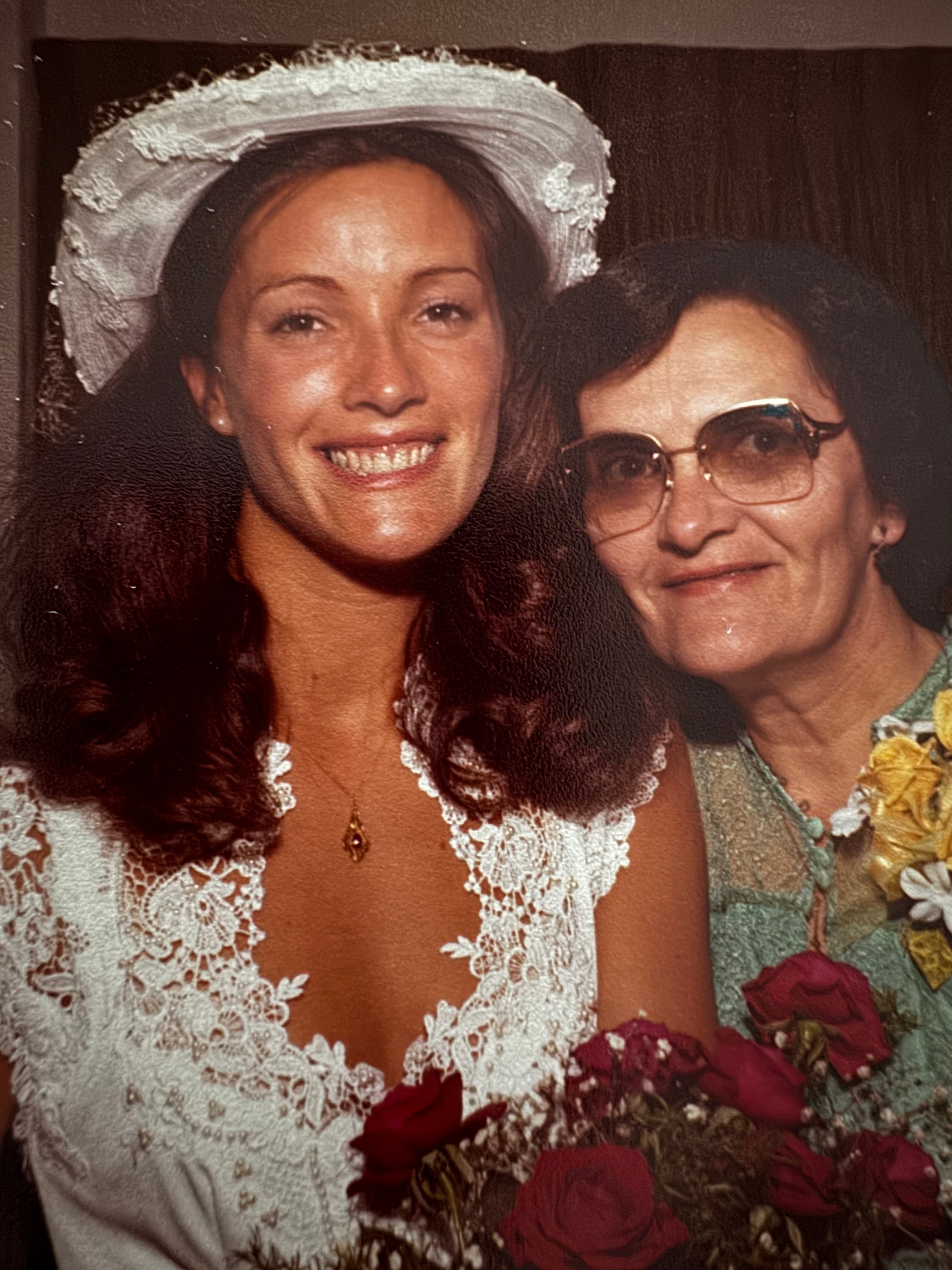
Sue’s journey in the Sandwich Generation begins after her mom unexpectedly dies at age 68, just around same age that Sue is now. Sue (who I have the privilege of calling my Ma) experienced the grief of losing her mom so much earlier than expected, and discusses what she has done that works, and what she wishes she had done sooner. Sue describes the complicated, long journey of caregiving for her dad, when the relationship was far from perfect. This conversation is honest, vulnerable, and very personal.
A Devastating, Unexpected Event
Lissy: Even though there maybe wasn’t the exact term for it yet, when did you first know that you were in the sandwich generation?
Susan: I mean, it was when my mom had her event. Up until then it was just sort of grandparent stuff as usual. Before that, my grandpa had died when you were 2 or so, he was 90. I was there for that, but it wasn’t my show. It wasn’t my responsibility.
I would say it was when my mom went down hard. Now, she developed asthma right around the time you were born. So there were those 10 years, but it was a manageable thing, or it should have been. And she would have times where she would go to the hospital so they could regulate her meds and things. Just trying to figure it out, because it was an adult onset type of thing.
There were some concerns, but at the time she died, she was 67, my dad was 68. They weren’t, old people in that sense.
Lissy: Yeah. Can you walk us through what happened with her event?
Susan: Sure, It was a nice and warm October day, which turned out to be part of her issue. I went over to our neighbor’s deck and had a glass of iced tea before I picked you and Mal up from school, and then took you to ballet. You guys are in your various ballet classes, and your dad comes in, which was strange, because it was still during the work day. And he said there’s an issue with your mom. She had some of these before, but this clearly was more a big event. And he said, I think we need to go to Platteville. So, let’s see… how did that work? I don’t even remember who you stayed with, or if someone came over. Because I don’t think you went that time. Do you remember going that time?
Lissy: No.
Susan: You came at a different time. Because he and I went, and then I stayed, and he came back and got you guys. They think she had come home from a get-together at a friend’s house in the countryside, a big luncheon, and had gotten dropped off. And as she was coming in, the city was doing chipper shredder of the fall debris. And so the thinking is that there might have been enough in the air to set off her asthma to a high level.
And the next thing we have documented is that she called 911, and all she said to them was asthma. And when they came, there’s a thought that she maybe had pretty much passed away by that point. But when they come in the door, they have to do all the first responder things, because they don’t know if it was the second before, or in the whole process, So they scoop her up and take her to the hospital, which is just a couple minutes away. And she never came out of that situation.
There wasn’t a big, full-on autopsy. But it appeared that maybe the stress of the repeated asthma things was hard on her heart. Because earlier in my childhood, she had a tachycardia issue. Which, you know, it’s not life-threatening generally, but it’s a thing.
And so, by the time we got there, she’s hooked up to all the things. And all the siblings were there, and my dad was there. It was 5 or 6 days of this comatose state. But during those couple days the neurologist did testing and was able to ascertain that there was no function above the brainstem. So there was no sitting around and saying your prayers and hoping for the best. There’s no best left.
It was interesting, because I sat with her a lot during that time, because my sisters and I were staying at my dad’s house, and there was a time where she seemed to be more there. And then there was a time where she seemed like she was not. It’s hard to explain, but I’ve talked to people who’ve felt the same thing in a similar situation.
And then you and your sister came. Your dad brought you, and you were able to kind of tell her goodbye, but she could not tell you anything back.
In the rearview mirror, you go, well, at least we got to say goodbye to her. You can do a lot of things with it to try to soften the edges. But, it was such a concentrated thing.
Supporting Kids in the Immediate Aftermath
Lissy: I think at the end of the day you just don’t expect that, when someone is 67 years old. I wonder if it was even on your radar, how to talk to Mal and I about all of this as it happened. We were 8 and 10 years old? It’s not like you could be having these ongoing conversations to prepare us, because it was so out of the blue.
Susan: Yeah. You had been around for when your grandma’s dad died, your great grandpa. You kind of had an experience, at least with that situation, but you were tiny. One of the things we did was, you had a pediatrician who I had a really good relationship with, and you girls did too, and he was the kind of guy where he had several kids of his own, and they were all a little bit older. He was a good resource in that way. I remember calling him and he said they might have trouble sleeping, all this stuff.
He said the other thing is, sometimes the kids just kind of go along to go along, or they see that you’re diminished, and so they don’t put the burden on you. But don’t be surprised if months from now, all of a sudden you notice things. And what you need to recognize is it’s delayed grief. And all the anger, and all the ball of wax that goes with it. It was really good advice to get.
One of the nice things is that you guys had your cousins who you were so close to in that family. You would look to Rachel and Nate to see, well, what do they think? How are they dealing with this, and what am I supposed to do?
My parents lived 3 hours away, and we saw them fairly periodically, they would come for your dance recitals, and they would come for birthdays, and we would meet up for things. But you had a good relationship with her. You had a good, solid connection. When you guys were little, she said I don’t care to hear any of the bad stuff. I raised 5 kids of my own. I don’t need any of that. Only tell me the good stuff. And you guys knew that, I swear. Because we could not see her for a month or two, and there was never any ground lost. You know, and back then, there wasn’t FaceTime or other things like that.
Grief, Continuing Bonds, and the Power of Anniversaries
Lissy: That’s so funny. This is a little bit of a leading question, because I have memories of this, but I’m wondering if you can speak to how you kept her memory alive. Both, within your own internal process, and then if there was anything with your siblings, and then with Mal and I and the family.
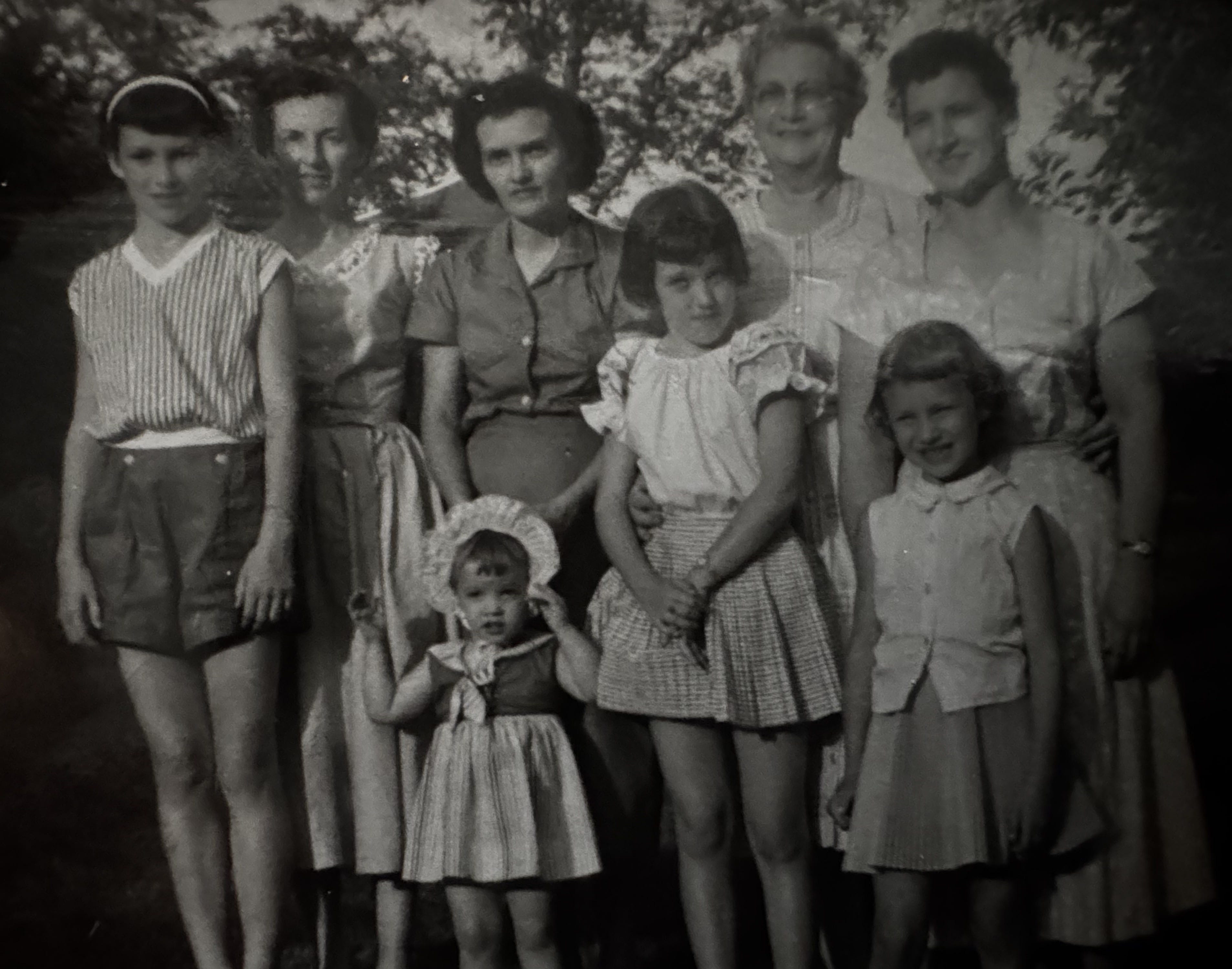
Susan: She had taught you girls how to make Lefse. Which she had learned, not from her mom, but from her mother-in-law, who was Norwegian, and who she had a good relationship with. My grandma had one daughter and four daughters-in-law, so they all got along really well, and that was something they had done, and so then she had taught you guys how to do it. That was one of the things, because it was a tradition, and it was a clear memory that you guys had of her.
And then, you know, we would go to Platteville right after she died. I had this grand idea that we would go once a month to help check in on my dad, because he was kind of a mess at the time. So at least we were there in the house. He was a complicated guy, and he was very reluctant to let anything go out the door. There were things where I was wishing that he would have gifted you girls. And he just didn’t, for any of us. Some of the stuff that helps me keep her memory alive is stuff I got after he moved into his memory care home.
Including the desk I’m sitting at, which was my mom’s pride and joy, but then it sat in the house for, well, he outlived her 22 years. I have things that she gave me throughout my life, times where she would say, what do you want for your birthday? And I would say, how about your little red milk pitcher, if you’re done with that. [the little red milk pitcher sits on a shelf in Sue’s living room to this day]. She had a lot of stuff, and she was happy to be sending some stuff out the door. And sometimes she would say, don’t tell your dad I’m doing this. And she said, whatever you do, don’t bring it back. So we have some things that she gave me, for my birthday or Christmas. And so those things are precious.
My dad did give me a ring that had been a gift to my mom from one of her aunties. And, it’s so nice to have. I used to carry it around with me, and our family would go to cool places that I knew she had never been to, and I would always have it with me. If I didn’t wear it, I would have it with me. Kind of like what people do with ashes.
Lissy: I like that. I remember, especially in the first years following her death, I remember you being really sad on her birthday, or was it the anniversary of her death? And I remember Pops saying, she’s missing her mom, and this is how it goes when you lose somebody you love.
And so I have this really clear memory of first learning about the power of anniversaries in that sense, and how it can bring someone into the room. They’re always with you, but then there are times where it really just shows up in these big ways. And now, what I appreciate now, being a parent myself, is that you didn’t try to grin and bear it, and pretend nothing was happening. That you were able to be in your grief. I think it is such a healthy example to set about grief and emotion for kids.
Susan: You know, I appreciate that. And I still do that. It’s that time in October, there’s something about the time of year. The switch to fall, it’s right after your birthday, which was a joyous time for her. And so then when your birthday would come around, it’s, oh, she’s missing another one.
There’s a writer, and I can’t remember her name, but you know how things just stick in your head, and she called it, The Secret Anniversaries of the Heart. That day doesn’t mean anything to the person on the street, usually. But to you, it does. It’s a day of loss. And I try to be celebratory on her birthday. And my siblings and I, we send notes on her birthday. That’s when we celebrate her.
And then on the day of her death, but I mean, which day did she die? Who the heck knows, really. And ironically, the legal day is also my Uncle Wayne’s birthday. So I would always send him a birthday card, and then think, this many years, that he’s been without his sister.
I still set aside that day. And I just read the book that had been sitting on the back burner, and I just don’t do anything for anybody. It’s kind of weird, but it works.
How One Parent’s Death Marks a New Chapter for the Other
Lissy: I’m thinking about how it went down with Grandma and Grandpa, and how Grandpa lived for 22 years after she died. It seems like Grammy Mae’s death marked the beginning of you and your siblings having a different role to play for Grandpa. You know, it’s almost like her death marks the beginning of the next chapter of your caregiving journey.
Susan: Oh yeah. Yes, and it’s something that a lot of people experience - it’s not only us. But when there’s a couple, and one goes, you realize that the person who’s gone was a filter, or was the connection, or that the dynamic wasn’t equal. And even though you knew that in life, it really shows in a different way. So that wasn’t terribly unique to us, nor was it surprising, because it’s my dad’s personality. By then, we were all adults. You know, Tommy was the youngest at 31 years old. He knew my dad’s personality. It was no surprise. But you appreciated how much the filtering by my mom had sort of softened the landing, maybe.
He just went out and was doing his own thing, but he was checking in on my grandma, who lived in town, who outlived my mom by 5 years. She was 98 when my mom died. And I’m sure you remember, we would go to see your great grandma. But at least he was attending to her needs, and checking in on the place she stayed, which was nice, but you still need to pay attention. We found out later that he also had girlfriends working there. But it still got done.
It was after my mom died that your uncle Jeff took the reins for all of us getting together in the summer. And at holidays, we would meet at your grandpa’s house, but he was worthless, basically. And so, we would all rally the food and the linens and get it all together.
Lissy: Yeah. I think that’s such an interesting point, that it wasn’t surprising to experience how much of a filter your mom was, and the glue. And that before she died, you didn’t need to worry about his behaviors as much, either because he was behaving better when she was alive, or she was keeping an eye on it, and it wasn’t on your radar in the same way.
And then needing to decide how much you need to worry about this, and how much do you just say, not my problem. But if I’m remembering correctly, some of it was poor financial choices, and things where it was your problem, because you want to make sure he has the money he needs to live.
Susan: I think it started happening incrementally, because he was only 68 years old, and he was very comfortable financially. But I think that the older he got, and you know, 10, 15 years later he was definitely being taken advantage of financially. And a lot of things we didn’t really find out until we were undoing that big ol’ house. Once he was out of the house, and we could actually get into the nitty-gritty of some of it. And we even talked to an attorney here in town, and she said you know, elder financial abuse is a tricky thing, especially when it’s a relationship that he had back when he was 68 and of sound mind and body.
Lissy: It’s complicated.
I’m reflecting on how long you guys were in that caregiving space with Grandpa. When I think about my work, and how our own personal experience impacts what we’re interested in. It lays the foundation for me, having grown up seeing you guys navigate all of this, seeing how much teamwork and patience and strength of your relationships with your siblings it took to be able to navigate it all. I have such clear memories of all of the years of you guys figuring this all out, and visiting all the ancient great grandmas in their care facilities, and then everything with grandpa, for so many years. And seeing how much time and energy it can take to do these things and to do them well. I think it has made me just, innately interested in it.
Sharing the Load by Divvying Up Caregiving Roles
Susan: The five of us feel very grateful that we’ve come out the other side of it and we’re all still friends. Because that doesn’t always happen. One of the things I learned that I’ve shared with other people is: when one person is there in the room with Dad and his dementia doctor, the person sitting 10 states away can’t second guess them. Unless it’s just something wildly egregious, but you know, at some point, you have to let go. Five different people couldn’t be controlling every little bit and piece of this. But you also can’t throw it all on one person. And that’s why we did a lot of divvying up of things, to make sure no one felt put upon.
Lissy: And how did you guys do that? How much of it was just natural, and how much of it was intentionally sitting down and figuring out who’s doing what?
Susan: Well, one of the siblings said, not it. So she took herself out of it. Your dad and I were happy to be involved in helping with some of the legal stuff that was going on, and being able to get things in place. Your aunt Judy and uncle Charley stepped up with taking away his car when it wasn’t safe for him to drive, and helping with appointments since they were close. Your uncle Jeff, being a doctor, was the logical person for the healthcare power of attorney, and he was happy to do it, and it came in handy. Luckily, he wasn’t overburdened by it.
But it brings up an interesting conversation from when my mom was in the coma after her event. The neurologist said - and one of your previous conversations reminded me of this - he said, let your brother be a son. Let him be a son, let him be a sibling. Don’t put him in the position of being your mom’s doctor. I’ll do that. I’m being straight with you, and I’ll do that, and I can give it to you in plain language. You know, because sometimes you look to the medical person just for translation. But it was in that hard decision-making, terminating the machines part of it, and it was a really good thing for the doctor to say. And the person who needed to hear it most was my dad. And he did, I think.
So back to later on, your uncle Tommy took on the other piece of it with financial power of attorney. He had the personality for it. And he was willing to take it on, but he also is the youngest. He is 15 years younger than my oldest sister. And so, I think he had energy for it.
There was a mountain of paperwork to do for my dad’s stuff. It was crazy. And there’s a provision, where sometimes the person doing that work can be paid for their time. And I advocated strongly that he needs to be paid. It wasn’t a large sum of money, but he was putting in a lot of time. He was going down to Platteville, and he was yelling at bankers who let my dad give money to these ladies, and I mean, it was kind of fun, in a weird way, to watch. And he needed to be compensated, not just for his gas but for his time, too, because somebody had to do it. And he was perfect for it.
Lissy: What you’re saying totally makes sense, where you play to what people are capable of, willing to take on, and what suits their skill set. And it’s kind of a dream team scenario that you were able to check all these boxes.
Susan: Yeah.
Lissy: And then I think that for so many people, now more commonly, there’s just two people. Maybe there are two siblings, maybe three, but also maybe it’s just one person. So then thinking about all the stuff that has to happen, it’s really overwhelming for folks, especially when it’s just, okay, is it me or you, you know?
Susan: Yeah. Although, I can guarantee you, if we keeled over tomorrow, you would not have the paperwork nightmare that your poor uncle Tommy was sorting through.
And some of it was not pretty. Some of it was heart-wrenching. Because my dad kept these little ledgers for the people he had given money to, and it was Tom looking at this thing and saying you know, I asked him to help me with my healthcare insurance, and he said no. But look, here he was, that same quarter, giving money to some woman or another.
Lissy: That’s upsetting.
Susan: It’s sad that he had to deal with it.
Lissy: Yeah. And I think that’s the reality for so many people. That it’s not this rosy relationship with the parent where you’re doing it out of the goodness and generosity of your heart, because your parent has always been so generous and good to you. So often it’s more that you need to do this because it just needs to be done.
Susan: Yep. We went into it with two generally agreed upon bullet points: do the right thing, as a member of society, as a person on the planet. And have no regrets.
When my dad was in the nursing home at King, Judy had a caregiver take her aside and say, you know, considering what kind of a situation you’ve had with this man your whole life, you’ve done an amazing job. And basically what Judy told her was, we’re just doing the right thing.
And if he had been someone I grew up so terribly close with, I maybe would have been there a lot more. But we were there enough. We were there enough, and we were taking turns. There again, the beauty of having the five of us.
Lissy: Yeah. Feeling like you can support him and be there for him, but also within the limits that feel good for taking care of yourself, given what the relationship could feel like at times.
Processing in Therapy, and Other Things that Helped
Susan: Wheeling back to my mom and the things I wish I had done more for you and Mal. I didn’t have therapy until after my dad died. And that is a bit of a regret, that I didn’t carve out the time for it when my mom died. And the funny thing was, my therapy after my dad died became a lot about my mom, and my grandma. And part of it was, because my dad had kept so much of the stuff. And then as we’re going through it, we’re going through my mom’s life, my grandma’s, and what took me in was the idea of these people saying, oh, I’m so very sorry that your dad is gone. It’s gonna be a hard Christmas. And I was feeling like, it’s not, not for that reason, anyway. And then you feel kind of shitty, that society is saying I should be feeling this, and I’m not. And so, it was really good to go to therapy, at that point.
And it was easy to go to therapy after my dad died because I had a friend from book club who was a social worker, and she said, oh, I know somebody who’d be great for you, it would be a good fit. It was just easy, where before, I didn’t have that kind of relationship. Not that it couldn’t have been found. There was plenty of therapists to be found, but I just didn’t carve it out.
Lissy: Yeah. And I think our culture is much more encouraging of therapy now. It’s easier to have that be front of mind, because it’s in the conversation, you know?
I’m wondering if being just about Grammy’s age when she died brings up anything for you? Does that feel significant, or not really?
Susan: Oh, very much. Very much. And I’ve had that conversation with my siblings, because I’m the fourth one. And we all have had those thoughts, for sure. I think of all the things that I was sad that she missed, with you girls. And it can make me feel a little panicky.
Part of it, and this is also why I wish I’d had therapy, is that for a long time afterwards, I would think about how there I was, having iced tea with Amy, talking about what’s the next fundraiser at Elementary school, or whatever. And my mom was having this awful event 3 hours away.
For a long time after that, I would catch myself thinking I wonder if there’s anything terrible happening right now that I don’t know about. Isn’t that an awful thing? I mean, why didn’t I get therapy about that? So it kind of ties in with the feeling of, okay, now I’m her age.
And so I try to take good care of myself. And it’s not that she was leading a bad life, it’s just that she was in charge of my grandma, and my grandpa’s two sisters, her aunts. She had all this stuff going on. Plus, she had a pretty active social life, which is grand. But I sometimes worry about how much her own health kind of slipped through the cracks.
Lissy: And it makes you want to make sure you’re prioritizing your health and doing what you can to care for yourself. That makes sense. I think what I feel is that you are very present in your grandkids’ lives, and soaking up the time with them.
I’m wondering what you found to be most helpful, throughout that process. Communication with your sibs. Therapy, eventually. The pediatrician guiding you around the stuff with Mal and I. Was there anything else that was helpful?
Susan: I’ve been lucky enough to have good friends. We’ve had friends who weren’t afraid to have a dialogue about it. I guess I feel lucky that way. So that was helpful. And the neighbors - I mean, when we were gone they watched the dog, and cut the grass. There were people doing things that were really nice, taking some of the edges off.
You had a teacher who was very sensitive to what you were going through, and very kind, and your soccer coach was a great guy, and very sweet and sensitive to what was going on. We were lucky to have people like that, or to have chosen people like that.
And now, I mean, there’s still stuff. It never truly goes away. And it all ramped up quite a bit around the time when Rachel died [my awesome cousin who died from cancer. Maybe more on this another time]. And you know, my grandma and my mom were very open about their grief, when my mom’s brother died in the war, my mom was only 14 years old. It wasn’t a never-spoken topic. And I think that helps.
Lissy: Yeah, that’s huge.
Susan: And then for now, when it shows up, Anderson Cooper has a really nice podcast that I listen to where he talks with people from all walks of life. And so you can find things that are good. And Dan Harris has 10% Happier, where he shares things from Buddhism that help with anxiety. There are a lot of things out there.
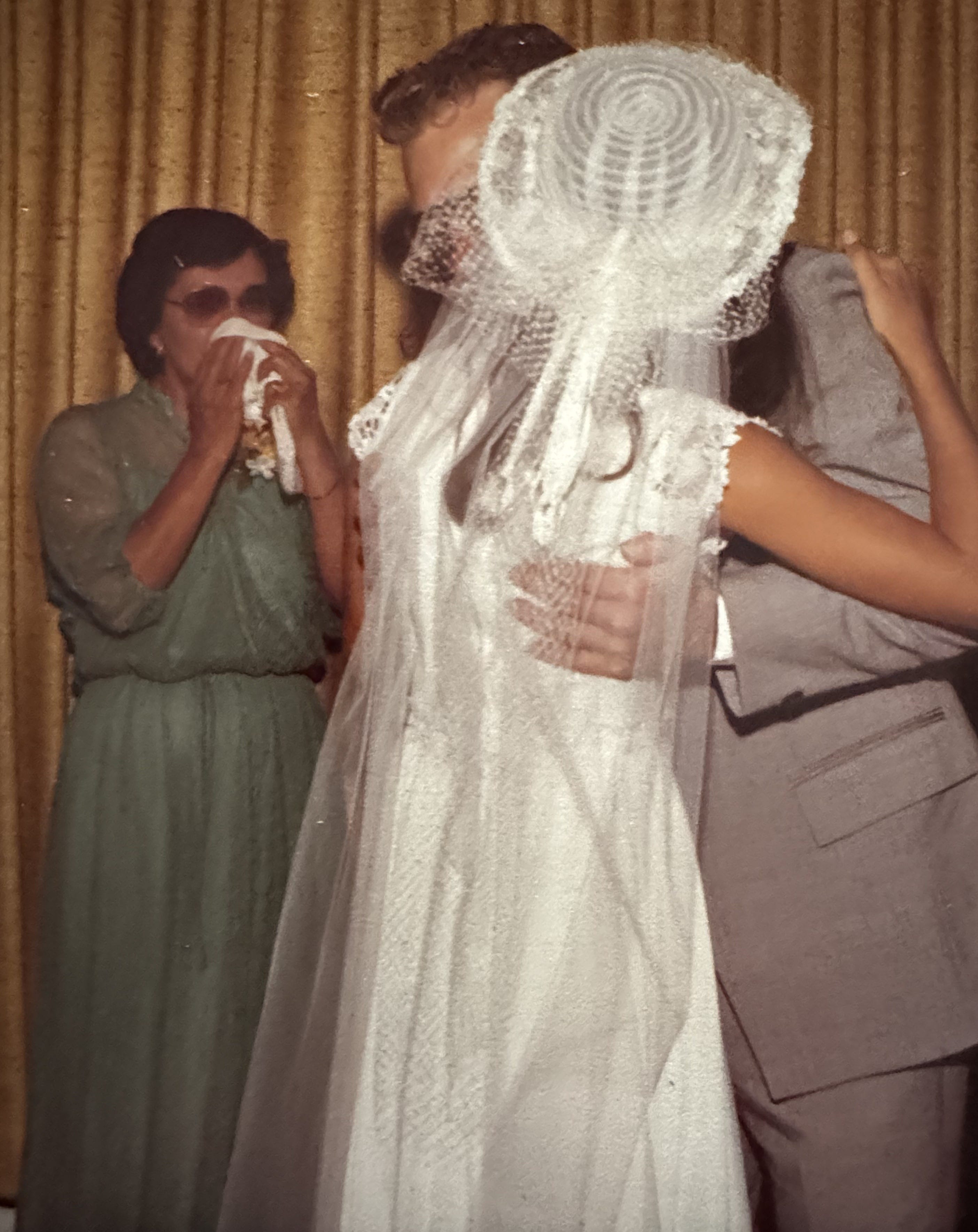
It really helped me a lot that your dad was almost as sad as I was when Grammy died. That’s why I sent you that picture from our wedding album, where my mom’s in tears. She was so happy! She just kept saying sorry to be crying, but I’m just so happy! And, I mean, she was sad that we were going to move all the way to southern Indiana, but she was so happy for me, and so happy to have Andy in the family.
Lissy: That’s so special. Thanks for being willing to talk to me about this, Ma. I feel like this is going to be a little bit of a different one, because it’s so personal.
TL;DR: Biggest Takeaways and Reflections for Caregivers
Supporting kids who are grieving: grief can show up in so many ways for kids, just like adults. Support you kid by modeling and normalizing through your own grieving process. Seek out resources and support if you are worried about how your kid is processing their grief. Judi’s House is a great place to start.
Continuing bonds: Find ways to continue to feel connected to your loved one who died, and support your kids in finding traditions that will help keep their memory alive. Know that some anniversaries may feel significant, and others may not.
Caregiving in a strained relationship: it can feel complicated and overwhelming to navigate boundaries and your emotions when you are caring for a loved one with whom you have a complicated relationship. Establishing ground rules and values to stay tethered to can help. For Sue and her siblings, it was: “do the right thing, as a member of society, as a person on the planet. And have no regrets.”
Explore available resources: therapy to process complicated emotions and process your grief, visit Sandwich Support Co’s Resources Page to explore the caregiving load, listen to Dan Harris’s podcast or Anderson Cooper’s podcast to process grief.
Say YES to support: a neighbor’s offer to mow the lawn, friends who truly mean it when they say “how are you doing?”, a supportive teacher or coach, a helpful doctor. It all adds up, and helps you feel part of a community during a time when you need one most.
Consider becoming a paid subscriber to receive resources, scripts, and tools straight to your inbox.
Know someone who might resonate with this interview? Give them the virtual hug of sharing this interview.
If you are interested in 1:1 coaching and resources to help you feel confident in how to navigate your time in the sandwich generation, please reach out to me through my coaching website, Sandwich Support Co, at the link below.